
Eat Well for Health
The food we eat every day has a big impact on our health – a healthy diet doesn’t have to be boring or restrictive!
Balance is the key to getting it right. It’s about eating a wide variety of foods in the right proportions & working towards and keeping a healthy body weight.
So, how can I choose a balanced diet
Using the Eatwell Guide
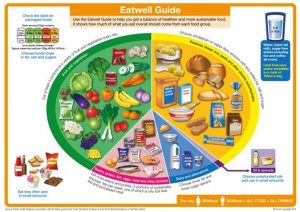
The Eatwell Guide shows the different types of food we should eat and what proportion we should eat them in, to achieve a healthy balanced diet.
Find out more about the Eatwell Guide
- Nutrition and Education Training Programmes Available
- Resources available to support training
- Vegan Information Sheet
- Check out the Public Health Dietitans YouTube Channel on Eating Well here
Plenty of fruit and vegetables
Did you know that around only 1 in 3 people in our local population eat the recommendation of at least 5 fruit and vegetables a day?
More on 5 A DAY
Plenty of starchy foods, such as bread, rice, potatoes and pasta
Try to base your meals on these foods – they’re a great source of energy and B vitamins. Choose wholegrain varieties to boost your fibre intake.
More on starchy foods
Some beans, pulses, fish, eggs, meat and other sources of protein
These provide important sources of protein, vitamins and minerals. Choose lean meats and eat less red and processed meats e.g. bacon, ham and sausages. Aim for two portions of fish per week, one should be oily e.g. salmon, mackerel or sardines.
More on meat, fish, eggs and pulses
Have some dairy or diary alternatives (soya drinks and yoghurts)
Choose lower fat and lower sugar varieties which still help you get enough protein and calcium.
More on milk and dairy foods
Note that for young children whole cows milk should not be used as the main drink until after 1 year. Semi skimmed milk may be given from 2 years. Skimmed milk should not be given to children under 5 years
Choose unsaturated oils and spreads and eat in small amounts
There are healthier type of fat and include rapeseed, olive and vegetable oils. Remember though, all fats are high in calories and energy so use sparingly.
Find out more about fats
The Public Health Dietitians have provided a wide range of evidence based nutrition information on YouTube videos. Click here to access
Public Health Dietitians – YouTube
A series of 5 short videos to improve knowledge and confidence cooking from scratch, cooking safely and food budgeting
Shop, Cook & Save – YouTube
Eat foods high in fat, salt and sugar less often and in small amounts
Eating fewer sweets, cakes and biscuits and drinking fewer sugar drinks will help reduce your fat and sugar intake. As well as being kind to teeth, this will help keep your weight in check. Did you know that more than half our population is overweight?
Find out more about cutting down on sugar
Drink plenty of fluids – 6-8 cups/glasses a day
Water, sugar free drinks, lower fat milks, tea and coffee all count towards this recommendation. Fruit juice and smoothies also count; however limit these drinks to no more than 150ml combined total as they contain free sugars that can damage teeth.
Find out more about water and drinks
How much energy do I need?
We all need different amounts of energy or calories to be a healthy weight. How much we need depends on lots of factors including how active we are. On average women require 2000kcal per day and men require 2500kcal per day. This includes all calories from both food and drinks.
Find out more about calories
Cut down on salt
Eating too much salt can raise your blood pressure, which increases your risk of developing heart disease or stroke. Adults should eat no more than 6g of salt (approximately 1 teaspoon) and children should have even less. Replace salt with pepper, herbs and spices to add flavor and choose foods lower in salt by reading food labels.
reduce your salt intake
Momenta Weight Loss Programme
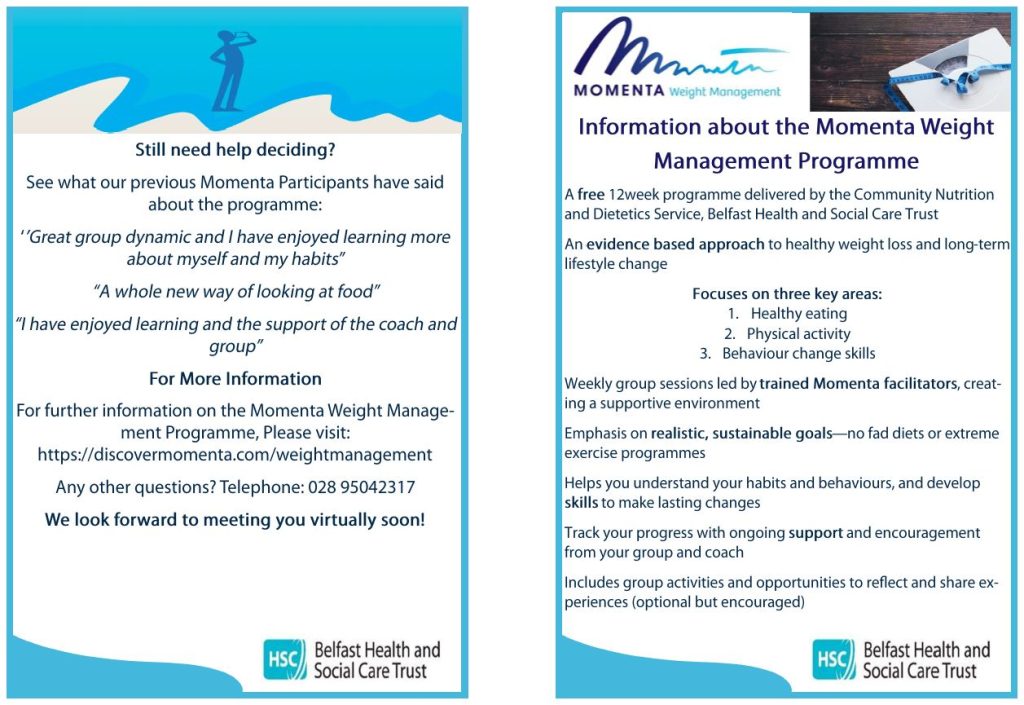
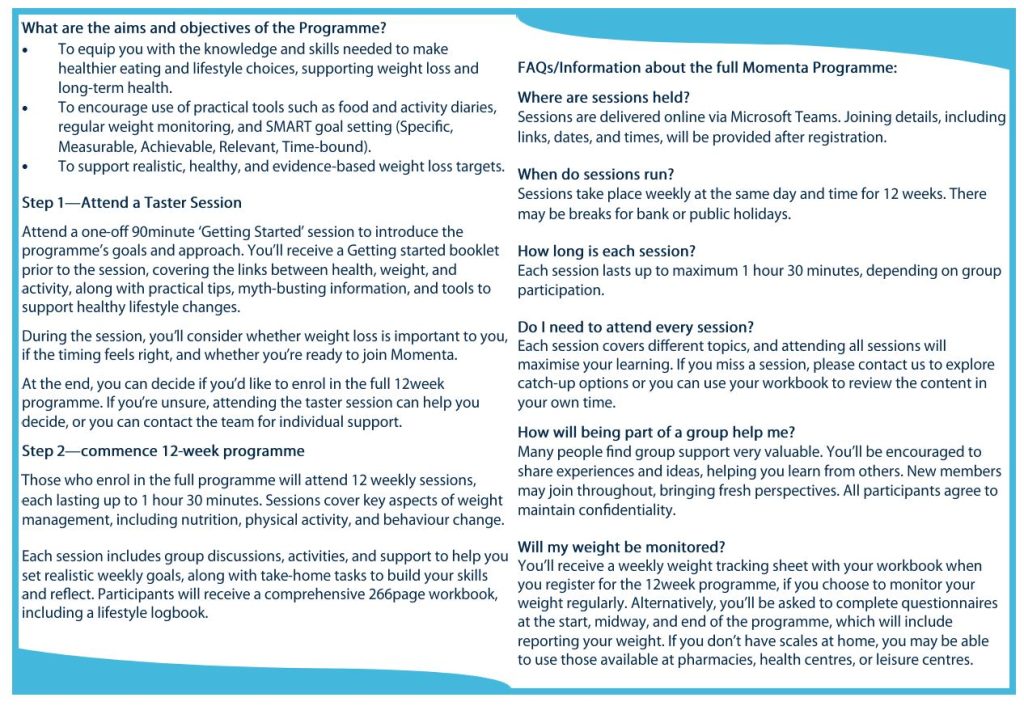
Momenta Weight Management Programme Access Criteria
- Over 18 years of age
- Reside within BHSCT/registered GP within BHSCT
- Have facility to join virtual group programme
- No interpreter needed
- BMI over 30 (south Asian, chinese, black African or Caribbean origin BMI >27.4)
- No recent history of Unintentional weight loss past 6 months
- No current diagnosis eating disorder (current active eating disorders not suitable)
- No complex nutritional problem requiring specialised dietary advice
- Not pregnant or breastfeeding
- No Learning disability (except from LD dietitians if they feel patient would be able to manage the content)
- Mental health conditions which would significantly impact ability to participate in group programme
- Weight loss should be high on list of priorities
- For prediabetes/diabetes encourage referral to DPP/DESMOND first
All patients referred for weight management advice will be triaged to the Momenta weight management programme inless referrer states otherwise on referral. At the point of recruitment, if patient not suitable for virtual group, 1:1 with dietitian to be offered.