
What is Neurodiversity?
Neurodiversity is the term used to describe the variation in neurocognitive profiles across the whole population. It is not about one condition, difficulty or difference. The term recognizes the variety in the way we speak, think, move, act and communicate; that human brains are diverse and varied. Each one of us has a unique set of different connections with our billions of nerve cells therefore the way we interact with our environment can vary from person to person.
Neurological profiles can be collectively grouped as:
- a) neurotypical (someone fitting a majority neurological profile and is not neurodivergent);
- b) neurodivergent (someone who fits outside majority neurological profile and is commonly associated with autism, attention deficit hyperactivity disorder, dyslexia, dyspraxia, dyscalculia, dysgraphia and Tourette’s syndrome – there is no definitive list of conditions associated with neurodivergence).
Belfast Health and Social Care Trust is Northern Ireland’s largest employer, with 22,000 staff providing health and social care to 340,000 people and it supports numerous service users and employees who are neurodivergent.If 1 in 7, or 15% of the population are neurodivergent, then that would be 3,300 staff and 51,000 service users as a minimum and that figure only includes those with official diagnoses. This represents a significant proportion of our staff and service users who present with potentially hidden or unmet needs.
Lack of Awareness Creates Barriers
- If we are unaware of neurodivergent needs, we can create barriers to our services in Belfast Trust.It is easy to see that if you are in a wheelchair and you are asked to go upstairs, you are going to struggle.This is easy to visualize. It is not so easy to visualise the challenges for those who are neurodivergent.
- Creating a neuro-affirmative environment does not mean taking on an overwhelming renovation, it just involves thinking of the needs of the individuals who fill the space and finding small ways to accommodate them. Small changes can make a big difference.
What does the Neurodiversity Service do?
The Neurodiversity Service supports services, teams and practitioners in understanding and navigating neurodivergence through staff training, clinical consultations, service development, consults on neuro-inclusive environments, co-chairing the Belfast Autism Forum and publishing regular neurodiversity newsletters.
Who Provides the Service?
Dr Frances Beagon, Consultant Clinical Psychologist, is the Neurodiversity Lead for Psychological Services. Dr Beagon has significant clinical experience of working with neurodivergent individuals and has extensive experience of leading service change. Dr Beagon’s role as Neurodiversity lead involves building connections with other services, agencies and service users, with the recognition that lived experience of different neurotypes is beneficial to Belfast Trust as a whole. Dr Beagon seeks to improve both service user experience and service delivery for patients and families.
Neurodiversity Awareness Training
- Psychological Services has been providing Neurodiversity Awareness Training sessions to staff teams in the Trust and to outside agencies working alongside the Trust – this training has been developed in conjunction with neurodivergent individuals and incorporates lived experiences because every time we have an opportunity to hear someone else’s story we understand more about how everyone is different.
- The neurodiversity awareness training has been delivered to staff with various experience and skills, some newly appointed to their role and some long-standing, highly experienced members of staff. All have been eager to know more and promote neuro-affirmative practice in their own area of expertise.
- It is hoped that the impact of this employee training is akin to a pebble dropped into a calm pond—it creates ripples that spread far beyond the initial point of contact.
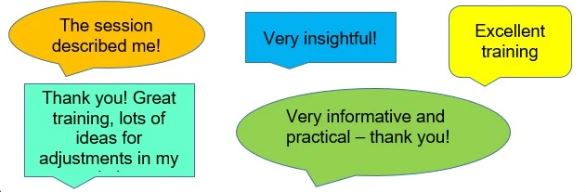
- Some of the comments from those who have received training….
Neurodiversity News
In October 2024, Psychological Services released the first Neurodiversity Newsletter in Belfast Trust packed with information on neurodiversity as well as news, service developments, training opportunities, resources and research. The newsletter is published every two months.
- October 2024 – What is Neurodiversity
- December 2024 – The Festive Edition
- February 2025 – Neurodiversity – The Female Perspective
- March 2025 – Neurodiversity Celebration Week
- April 2025 – Neurodiversity in the Workplace
All editions can be found on The Loop
If you would like to be on the mailing list or access any back copies, please contact the service by email.
Neurodiversity Champions in Belfast Trust

The Neurodiversity Service recruits and supports Neurodiversity Champions across Belfast Trust. Neurodiversity Champions are individuals who strive to make Belfast Trust an inclusive environment for neurodivergent staff and service users, focussing on best practise, policies and initiatives. Our Neurodiversity Champions raise awareness about neurodiversity by educating others about neurodiversity, challenging stereotypes and highlighting support and reasonable adjustments that are available.
Each Neurodiversity Champion is supported in their acquisition of knowledge of neurodiversity through in-service neurodiversity training and is assisted by the Neurodiversity Lead who meets with them quarterly.
All neurodiversity champions work to foster a culture of acceptance, support, and empowerment. All Champions are linked with each other thus allowing them to gain support from each other. By fostering a supportive network, champions empower each other and all neurodivergent individuals to reach their full potential.
The Belfast Autism Forum

Neurodivergent can be used to describe someone who has a neurodivergence such as autism.
The Belfast Autism Forum is a collaborative forum that aims to facilitate improved partnership working in Belfast to better support autistic children and adults and their families. The forum meets regularly throughout the year and membership is currently open to all including those in the Public Sector, Community and Voluntary sector, Private Sector and autistic individuals and families. Two co-chairs lead the forum, Dr Beagon from the Neurodiversity Service and Claire Burke, an autistic advocate and co-chair. We also have parent representatives as well as representatives from health, education, PSNI, NIHE, Belfast City Council, Civil Service, Specialisterne NI, National Autistic Society, Autism NI, Barnardos, Cedar and the Now Project as well as many others. Through its work the Belfast Autism Forum seeks to
- Promote awareness and better understanding of the challenges faced by people with autism and the changing nature of these challenges over their lifetime
- Promote support for autistic people, their families and carers to become well informed about accessing the services they need
- Encourage inclusion of people with autism in all aspects of normal life.
- Ensure public and personal involvement
Neuro-affirming Environments
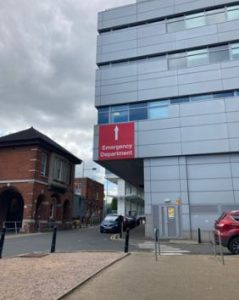
- Neuroaffirmative practice is a relatively new approach to healthcare that aims to provide a safe and welcoming environment for neurodivergent individuals. It seeks to recognise and celebrate the differences in individuals and offers tailored support that is attuned to their specific needs. Neuro-affirming environments support meaningful participation and belonging and are crucial to health, well-being and quality of life. Health environments that are expected to meet the needs of a variety of diagnoses are enhanced by incorporating accommodations that respect individual diagnoses and disability related needs. In Belfast Trust, Psychological Services has been helping teams assess our hospital environments and make improvements.
- Making environmental adjustments can have an instantaneous impact on how comfortable neurodivergent services users feel within the Trust. The more comfortable we feel in an environment, the more likely we are to visit it and receive the help we need. These environmental changes can be as small as improving signage, changing lighting, reducing noise, improving layout, making calming objects available etc.
- Should you want to chat about accessing any of the services listed, initial enquiries can be made via email or by phone.
- The service only accepts internal referrals.
- 📨Frances.Beagon@belfasttrust.hscni.net
- 📞02895045282
Neurodiversity Service (Psychological Services)
- Neurodiversity Awareness Training on HSC Learn
- This training supports staff in learning about neurodiversity and is available here: LearnHSCNI | Catalogue
- The training was co-produced by the Strategic Planning and Performance Group, HSC Leadership Centre and Middletown Centre for Autism.
Module 1 contains two sessions:
- Session 1- Understanding the Autistic Experience in Healthcare
- Session 2- Understanding Neurodiversity
Module 2 contains two sessions
- Session 1-Providing Supportive Environments
- Session 2-Effective, Clear and Compassionate Communication
Module 3 contains two sessions:
- Session 1-Promoting a Neuro-Affirming Culture
- Session 2-The Autistic SPACE Framework
Each session takes approximately 30 minutes to complete
- Neurodiversity Manager Helpline – this is not part of my Neurodiversity service but part of the Occupational Health Service.
The Trust’s “Understanding Neurodiversity in the Workplace: Support for Managers” clinics commenced on 04 September 2024.
This clinic is for managers and offers confidential support and guidance on how they can best support staff (with or without a formal diagnosis). This clinic does not replace the Occupational Health Management Referral process.
The clinic offers specialist, personalised advice from an Occupational Health and Human Resources perspective and the information provided is based on the manager’s experience of working with the individual neuro divergent colleague.
Managers can gain guidance on best practice, sources of support Trust-wide and signposts to key contacts within external partner organisations including Autism NI, Cedar Foundation, Access to Work Scheme and Workable.
Clinics are held via Microsoft Teams on a monthly basis and last no longer than 30 minutes.
Managers can book to attend one of these clinics by e-mailing: OHSENQUIRIES@belfasttrust.hscni.net