
28th May 2026
SPOTTING THE SIGNS OF WOMB CANCER
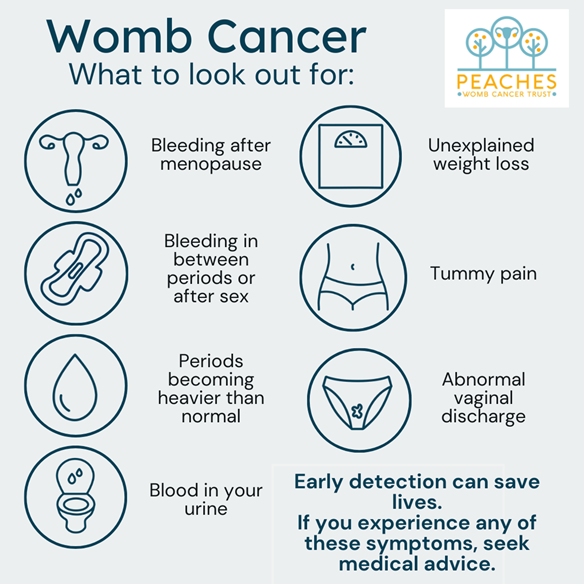
WHAT TO LOOK OUT FOR…..
June is Womb Cancer Awareness Month — a time to raise awareness of Womb cancer, also known as Endometrial Cancer or Uterine Cancer.
Womb cancer is the most common type of gynaecological cancer.
The earlier womb cancer is found, the more successful treatment is likely to be.
That’s why knowing the signs — and acting on them — can make a real difference.
What Is Womb Cancer?
Womb cancer, also known as endometrial or uterine cancer, begins in the lining of the womb (the endometrium). It most commonly affects people who have been through menopause, but it can also occur in younger people.
Having symptoms doesn’t necessarily mean you have cancer, but it’s always a reason to get checked.
The Most Common Symptom: Unexpected Bleeding
The most common and important warning sign of womb cancer is abnormal vaginal bleeding. This can include:
- Bleeding after menopause (even a small amount)
- Bleeding between periods
- Periods that are heavier or longer than usual
- Any new bleeding for those on HRT (hormone replacement therapy)
If you’ve been through menopause and notice any vaginal bleeding, it’s important to speak to your doctor as soon as possible. This symptom should always be checked, even if it only happens once.
Other Possible Symptoms
Some people with womb cancer also experience:
- Persistent pelvic pain or discomfort
- Pain during sex
- Unusual vaginal discharge, especially if it’s watery, pink, or has a bad smell
- A lump or swelling in the lower abdomen (less common)
- Unexplained weight loss or fatigue
These symptoms can be caused by many non-cancerous conditions, such as fibroids or hormonal changes, but it’s always safest to get them checked out.
Trust Your Instincts
You know your body best. If something doesn’t feel right, don’t put it off. Too often, people delay speaking to their doctor because they feel embarrassed, unsure, or worried about wasting someone’s time.
You’re never wasting anyone’s time. Your health matters, and your concerns deserve to be taken seriously.
When to See a Doctor
Book an appointment with your GP if:
- You notice any unexpected vaginal bleeding
- You have any of the other symptoms mentioned — especially if they persist for more than a few weeks
- Something doesn’t feel right, and you want reassurance
Your doctor may examine you, offer tests such as an ultrasound or biopsy, or refer you to a specialist if needed.
Find out more about womb cancer
Visit our information stand in the NI Cancer Centre reception (opposite the coffee shop) from Monday, 8th June 2026.
Information can also be found through cancer charities such as…